
Long COVID is a real physical condition
400 million people all over the world have experienced ongoing symptoms after COVID such as:
- fatigue and post-exertional crashes
- brain fog and memory issues
- breathlessness or chest tightness
- heart palpitations
- dizziness or nervous system sensitivity
And one of the hardest parts is… it often doesn’t follow a clear or predictable path.
You might have days where things feel a bit better, only to find yourself back where you started.
It can be confusing and deeply discouraging.

Is it in my head? Absolutely NOT!
At first, many people with Long COVID were told that anxiety and stress were causing their symptoms. That was invalidating and incorrect.
More recently, the conversation has shifted towards purely biological explanations — inflammation, immune dysfunction, autonomic nervous system changes, vascular problems and viral persistence. These biological changes are very real.
But an important question remains:
Why do most people get better a week after COVID and others have worsening symptoms for months or years?

Why am I not getting better?
It's not just about the virus - emerging research suggests that dysregulation of the autonomic nervous system, inflammation and immune function may play an important role in why some people remain unwell after a virus.
Activation of the amygdala and nervous system causes:
- surges of energy to heart and lungs (palpitations, myocarditis, fast shallow breathing)
- reduces the function of the immune system, digestion and hormone regulation
- causes inflammation and pain
- reduces mental clarity and sleep quality
For some people, emotional stress, trauma, perfectionism, over-responsibility or prolonged pressure may also contribute to keeping the nervous system in a heightened protective state — often completely unconsciously.

What can be done about it?
Most approaches focus on managing symptoms. And while this can be helpful for day-to-day coping, it doesn’t address why the body got stuck in the first place, so it doesn't provide a long-term solution.
When the body is supported to come out of this high stress state, both physically and emotionally, it can restore balance that enables natural healing to take place.
This is not achieved by pushing or forcing, but by helping the body to feel safe enough to reset calmly.

How Empower Therapies can help
The Switch® 4-day programme draws on the latest research to help you gently restore nervous system regulation, giving your body the chance to heal naturally. You’ll also learn to recognise habitual and subconscious patterns that fuel symptoms, then use practical techniques to undo these neural pathways.
The major difference between The Switch® and other brain retraining techniques is that we also address the original root cause of your illness by using The Deep Switch® to access and resolve any original trauma that is maintaining the stress response and is inadvertently preventing your recovery.
Plus we address lifestyle choices that have been scientifically recognised to benefit recovery.


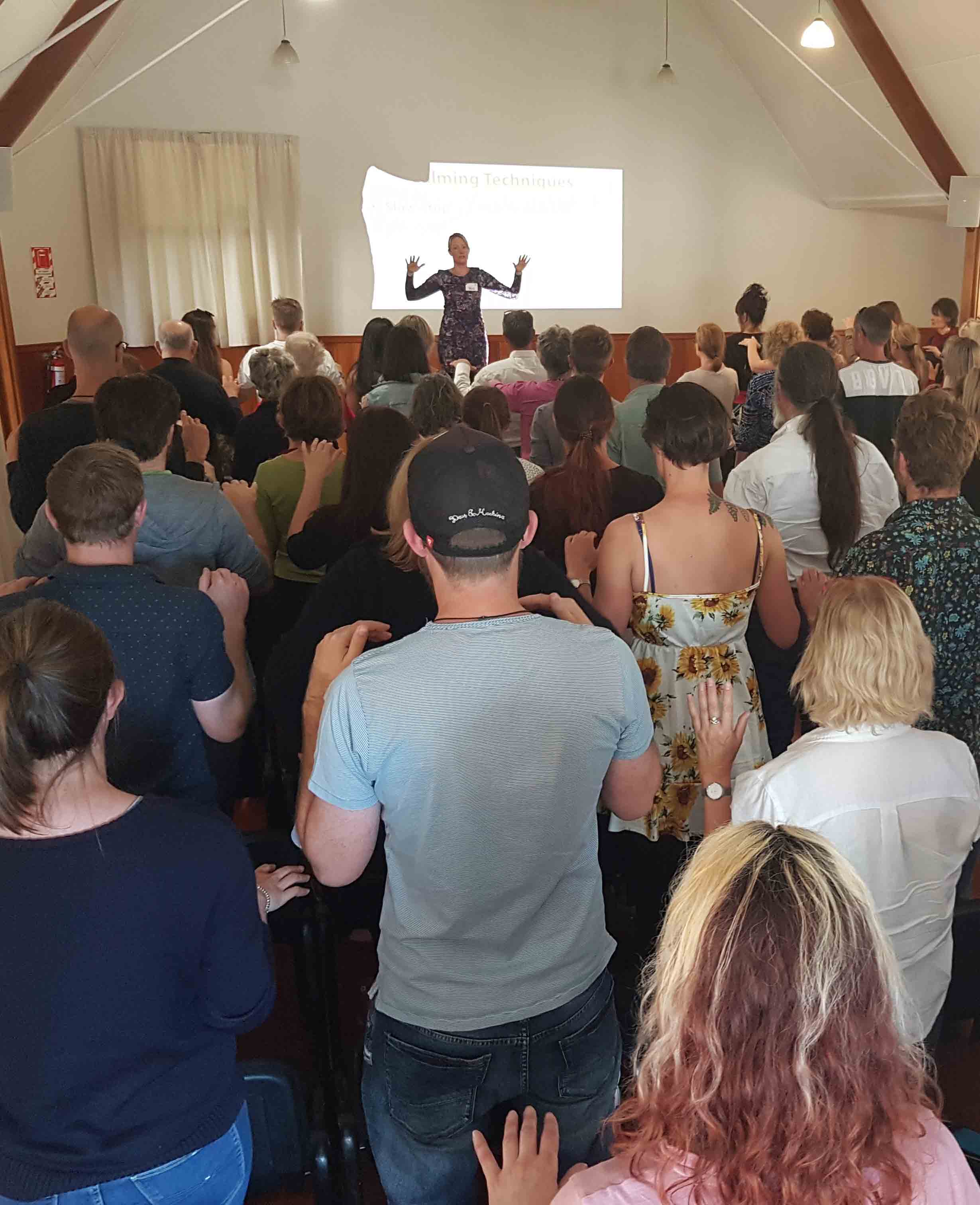
If you’re not feeling ready for a 4-day course, our Next Steps to Recovery 2-hour intro programme or the pre-recorded Switch Webinar Series, which you can work through at your own pace over six weeks, could be a perfect starting point. These courses give an overview of mind-body health, the impact of nervous system dysregulation and subconscious patterns, and simple techniques you can begin using right away.
Some of my clients have recovered from hospitalised or bedbound states just from doing our webinars. Others have made improvements and then been inspired to attend the full Switch® programme.
If you don't feel well enough even for a webinar, 5-10 minute private sessions with me can help you to get improvements to make these steps achievable.
Email us to enquire.

Our Long COVID Recovery Outcomes
We tracked the first year of long COVID clients very closely and were excited by the results!
16 – full recovery!
3 – at least 90% improvement
3 – 70-80% improvement
3 – 40% improvement
1 – no improvement
0 – got worse
1 – unknown, though reported improvements at the course
It was particularly exciting to note that five of these clients had Long COVID so severely that they were hospitalised multiple times, were wheelchair bound and could not think clearly enough to do simple tasks like tie their shoelaces. Another was housebound and required assistance to walk from her bed to the toilet. No matter how serious their illness, significant improvements, or full resolution of symptoms, have been reported by almost all these clients. I was also suprised and excited to see that results often happened more quickly than I had expected - just days or weeks sometimes, while others might take a few months.
There has not yet been any formal research trial on The Switch®, but I am hopeful that this may happen in future. I do not know what the outcome rate would be across all Long COVID patients, since I am working with people who first of all chose to apply for the programme, and secondly passed the assessment of readiness to attend, which is therefore a subset of all people with Long COVID.
Over the last five years, we have now had many people attend The Switch® for Long COVID. The graphs below show the outcomes of long COVID clients in the last two years.
No one dropped out of the programme and all clients are included in this data.
Four people applied but did not attend The Switch®, so are not included in the data.
Physical Health
This graph shows client's physical health scores out of 10 before, 2-months after, and 12-months after The Switch®. There was a significant improvement by 2-months post-Switch®, with only small variations by 12-months.

Emotional Health
Clients also rank their emotional health out of 10 before, 2-months and 12-months post-Switch®, demonstrating a significant improvement by 2-months, with no variations at 12-months.

Recovery
78% reported having resolved their symptoms "completely" or "a lot".
This was maintained at 12-months post-course.

Recommend
82% of long COVID clients would definitely recommend The Switch®.
No one said they would not recommend it.

Research Insights into Long COVID Treatment

Psychosocial approaches
"Psychosocial factors are also very important in regulating our immune activation and the response to SARS-CoV-2. Two of the main biological systems involved in the stress response, the hypothalamic–pituitary–adrenal axis or the autonomic nervous system, are also key in the regulation of our immune response.
Therefore, strategies tackling our levels of stress and/or the stress response, including psychosocial intervention, physical exercise or potentially dietary interventions, could be also useful in counteracting some of the negative effects of chronic inflammation."
Biopsychosocial approach
“Whilst we regard the symptoms of these conditions as real, we propose that they are more likely to reflect the brain's response to a range of biological, psychological, and social factors, rather than a specific disease process. Possible causes include persistent activation of the neurobiological stress response, accompanied by associated changes in immunological, hormonal, cognitive and behavioural domains. We propose that recovery is often possible if patients are helped to adopt a less threatening understanding of their symptoms and are supported in a gradual return to normal activities.”

Interventions for Long COVID
A systematic review of 24 trials and 3695 patients showed moderate certainty evidence that CBT and physical and mental health rehabilitation improve symptoms of long covid, and improve overall health and quality of life while reducing fatigue and depression.
Moderate evidence suggests that intermittent aerobic exercise 3-5 times weekly improves physical function.
No evidence was found to support effectiveness of medications, supplements, hyperbaric oxygen or an education app.
How can you help yourself?
- Preliminary research shows that it is important to get enough rest in the early days of your recovery. When you feel tired, rest. Don’t push yourself to do exercise before you are ready. When you do feel like exercising, only do gentle exercise with slow gradual increases. This step is applicable for the first 2-4 months after your COVID illness.
- Get your hope back about recovery being possible by watching some of the movies on this website. Just knowing that improvement and recovery may be possible can help people to relax and calm their stress response and get a bit of a lift in energy levels.
- Reduce your stress response by doing things like meditation, breathing exercises and activities that you find particularly relaxing.
- Watch the Next Steps to Recovery 2-hour webinar for some techniques for calming your body, changing your body language to create health improvements and catching faulty thinking patterns.
- Using a little more energy in your voice tone and body language can help you to start having more energy. However, until you have calmed your body out of the stress response and allowed natural healing to take place, it is unwise to do large amounts of exercise. Read my blog about post-exertional malaise to understand this better.
- If you would like to join a support group, that's all well and good, but choose your group carefully. Avoid groups that ban recovery stories and focus on symptoms. Choose groups that have a positive focus and encourage people who have recovered to share what worked for them. An excellent group to join is CFS/Long-Covid/ Post Viral Mindbody Healing Facebook group.
- Immerse yourself in a range of recovery stories and feel into which ones resonate with you. Raelan Agle's YouTube Channel - Simplifying Recovery and Jackie Baxter's Long COVID Podcast (also available on Spotify) have hundreds of great recovery stories for you.
If you still feel unwell after about 4 months you are likely to have slipped into the chronic illness zone rather than the acute zone. This is where it is now a good idea to look into attending the full four-day Switch® programme to rewire your brain and body back into wellness.
And remember, you're not alone. You are welcome to call us to discuss your personal situation and get some advice about which approach might be best for you. We understand how tough this journey is and we're here to help.
